Blues in search of a fourth straight St. Andrew’s win over the Baggies.
Contents:
- Introduction
- Predicted line-ups
- Out of possession play
- In possession play
- Statistical quirk
- Key players
- Prediction
It’s been a while since Birmingham City fans have been able to comfortably say the club are in a better place than almost any of their West Midlands rivals.
Years of mismanagement resulted in both derby day defeats and dismal league finishes, with Blues finishing lower in the football pyramid than Aston Villa, Wolverhampton Wanderers and West Bromwich Albion in each of the last nine league campaigns.
Things are looking up at St. Andrew’s now though, both on and off the pitch. Albion’s ongoing boardroom soap opera is a reminder of how stable Blues have become, and the teams on the pitch couldn’t be more different.
Only Sheffield Wednesday and Leicester City have worse form across the last five league games than the Baggies whilst Blues haven’t tasted defeat in their previous six.
These games are always tasty, but when did Blues legitimately head into a clash with their local rivals as favourites? They certainly will be on Tuesday evening.
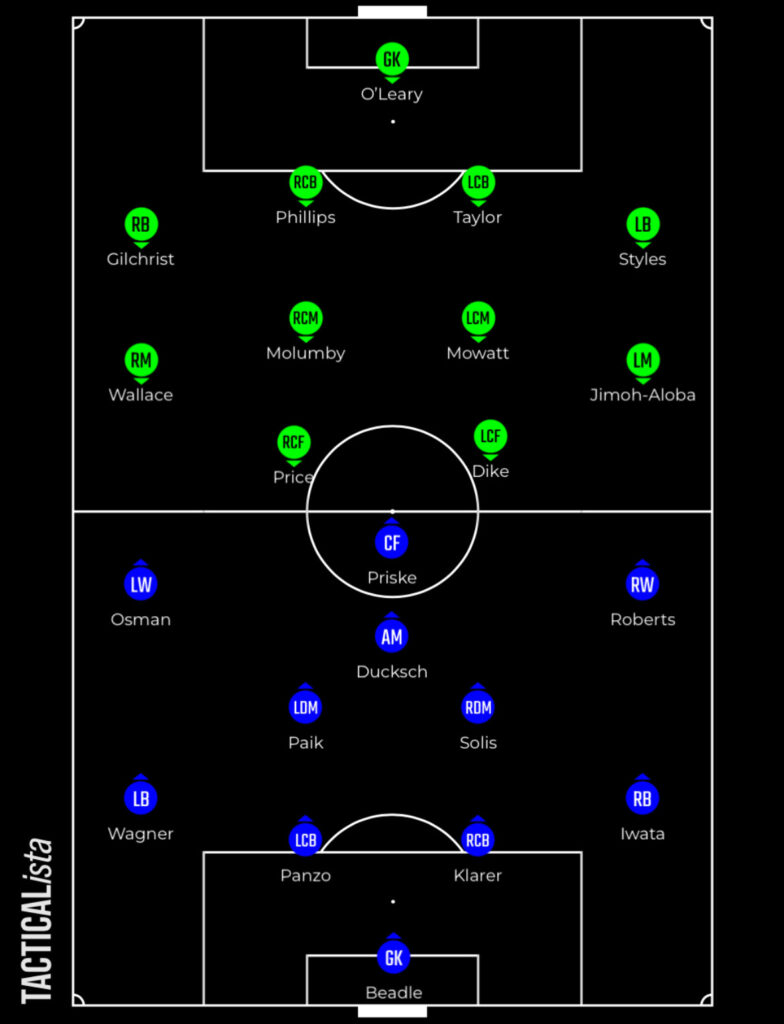
So how may the teams look?
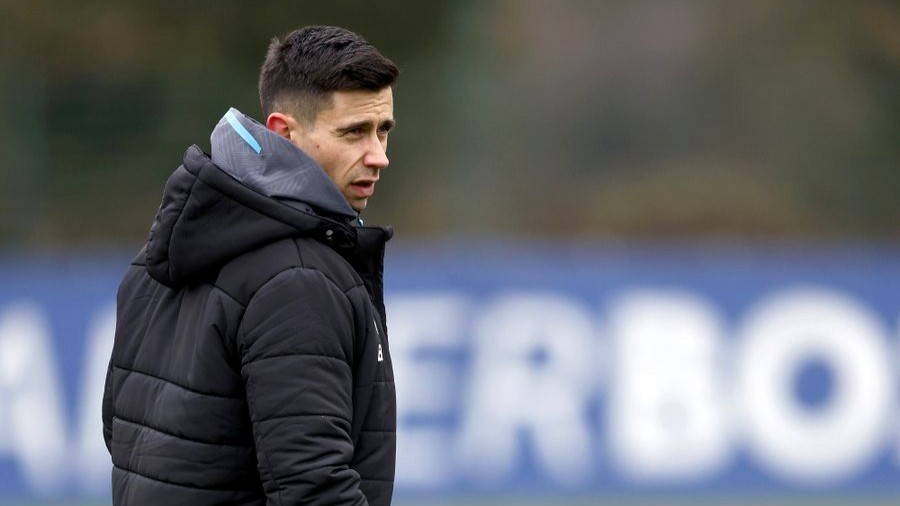
Eric Ramsay has struggled to find a rhythm since arriving at the Hawthorns but the 4-4-2 he used against Stoke brought his first home point.
Villa loanee Jamaldeen Jimoh-Aloba and Daryl Dike were positives whilst Jayson Molumby and Jed Wallace also showed positive signs.
Chris Davies may be stuck in two minds when it comes to selection – often preferring to field a settled XI but with a three-game week he could be forced into changes.
August Priske could be handed a first start whilst Patrick Roberts may retake his place in the XI. Tommy Doyle may also be reintroduced whilst Jonathan Panzo could make his debut.
Predicted line-ups:
Out of possession work:
West Brom have conceded the third most goals in the division (47).
Opposition’s half:
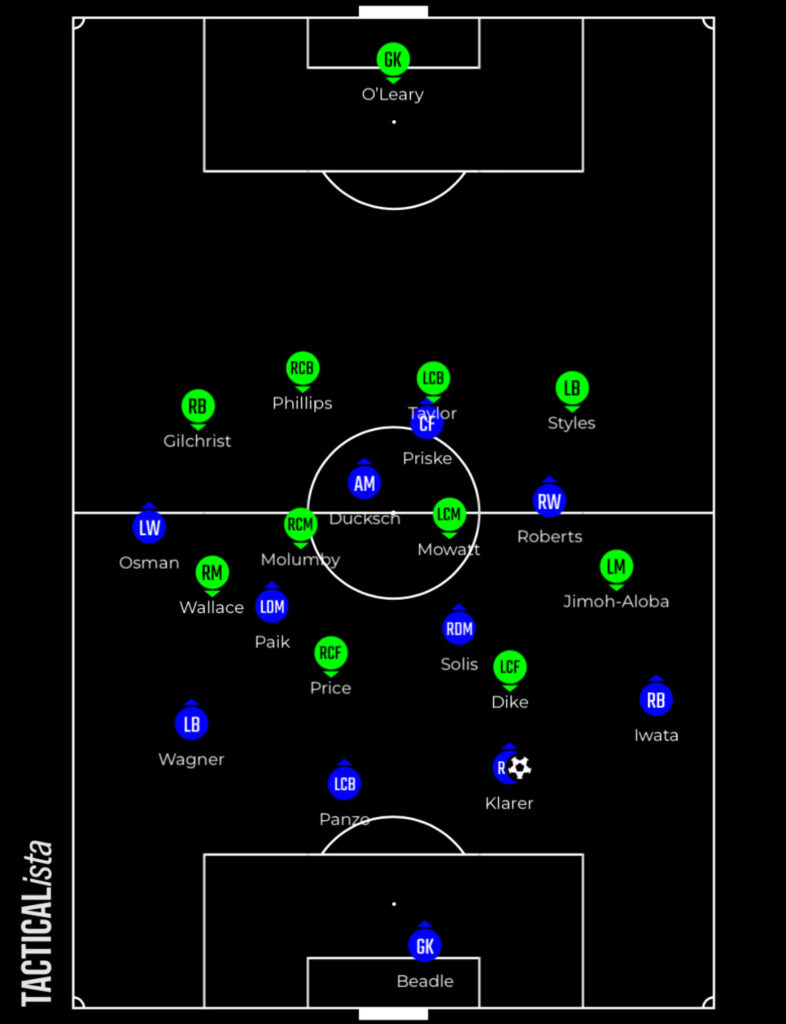
I was preparing to write this piece about the perpetual flaws of Ramsay’s 5-2-3 shape, yet their change in formation against Stoke City throws a spanner in the works.
Albion were much more solid against the Potters and a lot of that began with their structure off the ball.
They were much more reserved sitting in the 4-4-2 shape and it minimised the transitions players had to make between their first and second phase positions.
They did apply pressure to the ball, with Isaac Price and Dike closing down their respective centre-backs but they weren’t committing as many men high like they did in the previous shape.
When the ball went one way or the other they focused on getting players close to it. The ball-side striker drifted over into the channel whilst the midfielder also came across to support the full-back and winger.
This suffocated Stoke’s possession at times and allowed the Baggies to win the ball back much more effectively than they had been doing despite the fact they were probably less aggressive in their defensive work.
It also limited the ground the full-backs were asked to cover. In the previous shape it was the job of the wing-backs to press the full-backs and therefore they had big distances to cover quickly, leaving them exposed.
Own half:
As the game at the Hawthorns went on, Stoke seemed to figure out how to disrupt Albion’s approach.
The visitors looked to move the ball to the opposite flank quickly, taking all the players who had squeezed into the near channel out of the game and freeing up the opposite winger who was in space.
Blues could certainly do this with Ibrahim Osman and Carlos Vicente both natural wide-men and therefore able to hold their positions to receive quickly.
Ramsay’s side did look more solid with more natural defensive options playing against Stoke. Alfie Gilchrist and Callum Styles were more solid operators than Danny Imray and Samuel Iling-Junior.
Marvin Ducksch could also pick up clever pockets of space with the midfield pair West Brom deploy, likely being preoccupied with Paik Seung-ho and Jhon Solis, or being dragged into the channel to support the wide players.
In possession work:
Despite averaging just the 12th most possession in the league, Albion have played the fourth most passes.
Build up:
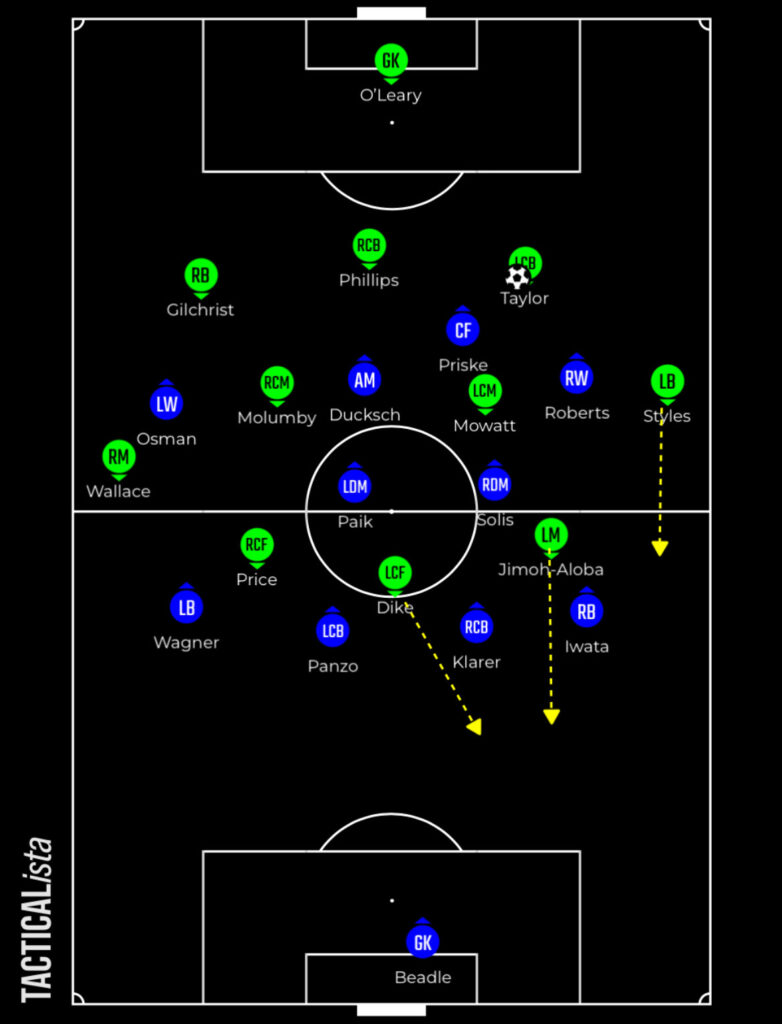
The change in shape didn’t simply make the Baggies a more solid outfit, it did also bring benefits on the ball.
The spaces between players in the previous shape were far too big, and that resulted in them losing the ball or being unable to progress it far too easily.
By losing a centre-back and adding another midfielder they reduced these spaces, with Wallace and Price both able to tuck in and receive from Alex Mowatt and Molumby.
Mowatt’s return was key, able to dictate play for Ramsay’s team. He also had plenty more options in front of him with Jimoh-Aloba and Wallace rather than the narrow front three they used before.
Albion have had possession in poor areas far too often this season and therefore going with a back four instead of a back three makes much more sense. Blues should find it relatively simple to close off some of their passing lanes however and force them long.
They do have a renewed threat in behind with Dike and Jimoh-Aloba both willing runners off the last line whilst Price peels into wide areas too.
Chance creation:
It would be unfair to suggest the formation shift solved all of their issues, with Albion having just two shots on target against Stoke and creating their lowest expected goals tally of the season.
Ramsay still looked to get five players on the last line, shifting into a 3-2-5 shape when they had retained possession. Gilchrist often tucked into the backline whilst Styles was given license to hold width on the left and Jimoh-Aloba could play as an inside forward.
This allowed Jimoh-Aloba and Price to dovetail nicely, with one dropping and one running in behind when they worked it forwards.
Dike or Heggebo are both interesting forward options, able to occupy defenders in different ways and there’s always the possibility Heggebo returns against Blues with his tenacity running into the channels.
With bodies in closer proximity centrally it did allow for Jimoh-Aloba and Wallace to get running infield and both had efforts from those scenarios.
Set pieces have been a big selling point both of Ramsay’s career and of Albion’s first half of the season, creating a higher percentage of their xG from set pieces than any other side so that’s an area to watch.
Statistical quirk:
Despite conceding the third most goals in the division, West Brom’s expected goals against tally is the sixth best in the league.
Key players:
- Callum Styles – a key role in defensive phases and drifting forwards, Styles has quality from wide and could support Jimoh-Aloba well.
- Alex Mowatt – the midfielder is a top dictator and will bring a cool head to the engine room.
- Aune Heggebo – the forward offers Albion a persistent outlet and his physicality will give Klarer and Neumann a test.
It’s strange for Blues to head into a game against Albion with a level of expectation on them. There’s a huge difference in the atmosphere surrounding the two sides and it’s up to the hosts to capitalise on that.
The Baggies away support have been at boiling point more than once recently and a quick start from Davies’ men could amplify any lingering frustrations amongst the travelling fans.
With a fresh set of alternative attacking options to select, fatigue shouldn’t be a problem in a three-game week, particularly given all of the games are on home soil.
My prediction: Birmingham City 2, West Bromwich Albion 1.