Blues are powering on with The Powerhouse.
The £1.2 billion, 62,000-seat stadium is due to be finished in 2030, with Blues moving in for the 2031/32 season after various safety and event tests have taken place.
Planning permission is to be lodged in March next year and the club are optimistic the ground will take three years to build.
At a special consultation update hosted by the club at St. Andrew’s – by the name of ‘Built By Us’ – some of the finer, updated details of the design were revealed as well as a stack of associated infrastructure developments.
Frankly, it was compelling stuff. Blues and designers Heatherwick Studio seem to have covered pretty much everything and it is hard to see how the stadium and the whole Sports Quarter project cannot be anything but transformational.
Fears that it might have lost ardour or even stalled, due to the stroke suffered by Tom Wagner, the driving force behind owners Knighthead, Blues and this whole shebang, were gently allayed.
Preparation and planning has been going on for more than a year and is continuing apace. Around 150 experts are currently engaged in the undertaking.
In a response during a question and answer session following the presentation, Blues head of infrastructure Nick Smith said the Blues chairman was “recovering well” and “challenging me all the time” to hit target dates on the design, planning and build timeline.
Blues have been holding monthly meetings with Birmingham City Council to keep them up to speed with everything so when the planning application goes in there won’t be any hitches, and it will be green lit a lot quicker.
“What would normally take a year to determine is going to be a lot shorter,” said Smith.
And the land on the 135-acre site, based around the old Birmingham Wheels Park in East Birmingham, is already being cleared and prepared.
Smith added: ” . . . everyone is telling us we can do (build) it in three years and that takes us to 2030.
“Then we have to have test events, we have to make sure it’s safe for all of you to enjoy and we do that in the first part of 2031, then start the season 31/32.”
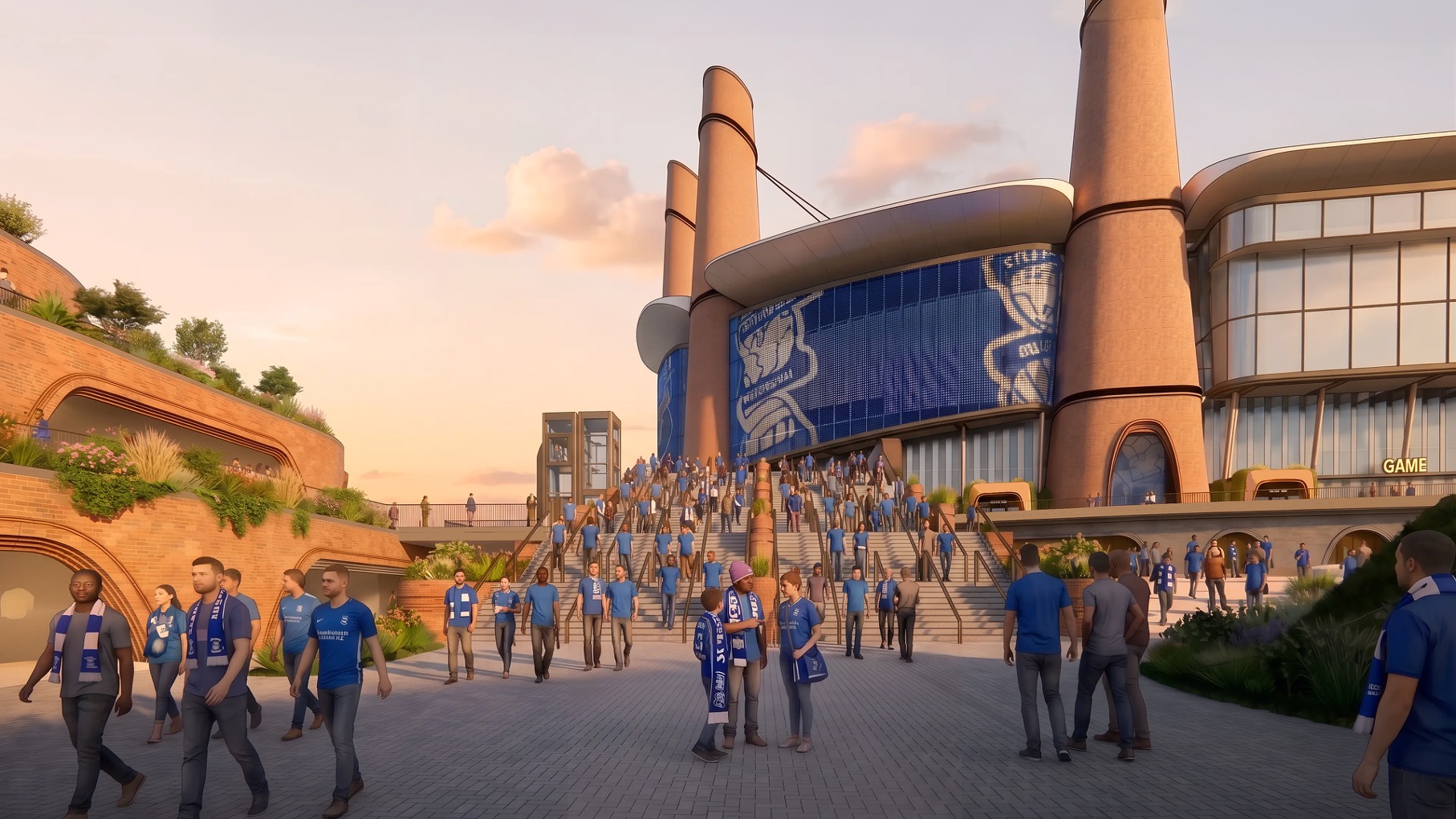
The Powerhouse will be a ‘podium sitting stadium’ – raised nine metres on a platform – and dominate the skyline, due to its sheer size and the distinctive design incorporating 12 chimneys.
If you want to walk around the 900m circumference of the stadium, expect to take 12 minutes.
The North and South stands will be single banks, pitched at a 35 degree angle, constituting the steepest bowls in football. Both are designated ‘home’ ends.
“It will be like standing on a cliff edge, looking down over a sea of blue,” said Eliot Postma, partner and group leader at Heatherwick Studio.
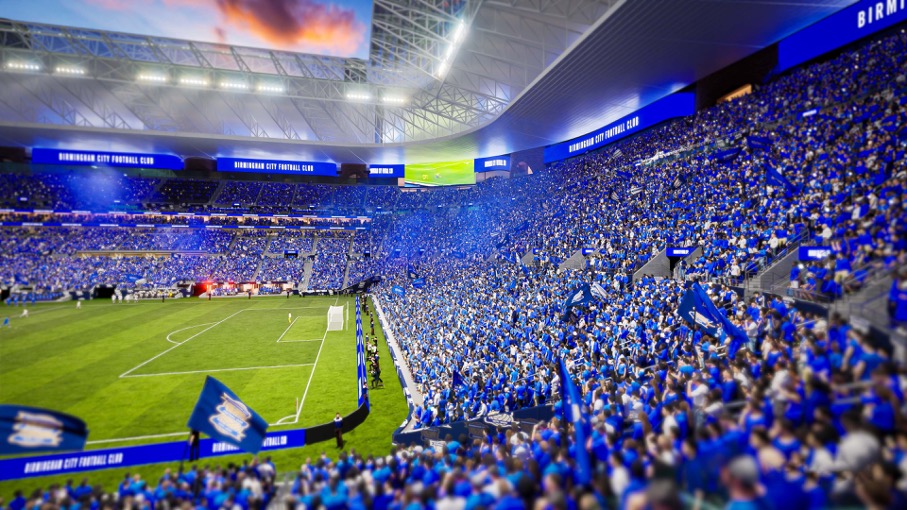
Away fans will be housed in the North stand, either in the top east corner or in a corner segment over the tiers, keeping them in the ‘pie’ – feedback is being invited on what Blues supporters would prefer.
The travelling support gain access through an underpass – their own tunnel – which will take them directly to the seats.
Wagner wanted The Powerhouse to retain elements of the earthy, intimidatory St. Andrew’s for visiting teams and followers.
Smith joked that they will use materials and colours in the passage to make it feel “so unwelcoming” and “open them out into this real dark, coal-pit of a bar before they get to their seats”.
Postma interjected: “It’s not often you have the clients say ‘make it worse, make it worse’!”.
I don’t know why, but I have visions of Arthur Shelby waiting inside for the travelling hordes with a Lewis gun – ‘welcome to Birmingham, lads . . . ‘
Sightlines to the pitch, the clarity value, will be unobstructed. The person in the highest point will look ‘straight down onto the pitch’ and not at the back of a swathe of heads.
As part of their hospitality ranges, Blues plan to have Lodge Boxes, Party Suites, Field Suites – pitchside – and ‘chimney seats’, executive boxes at the top of 11 of the 12 chimneys.
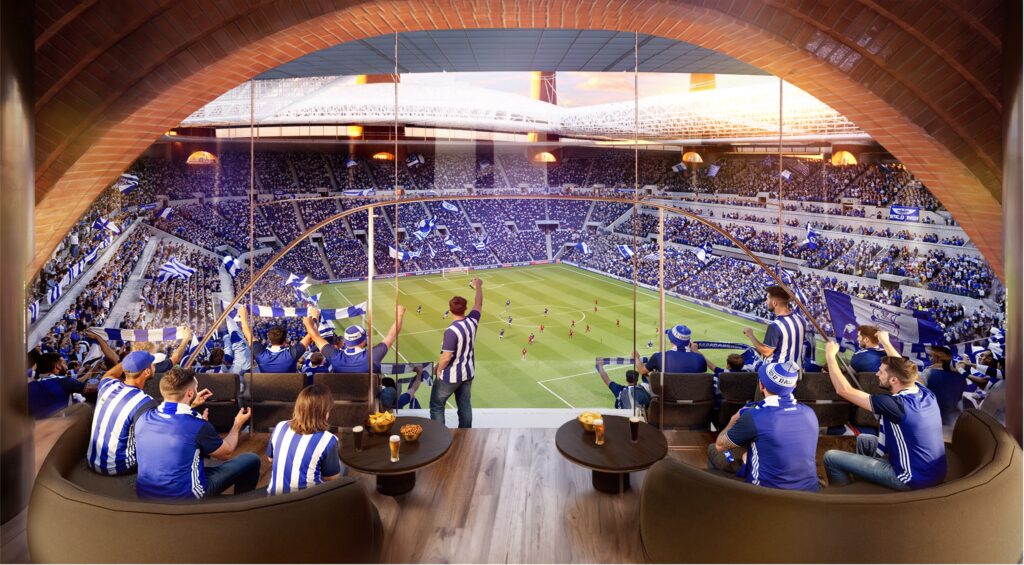
There’s going to be a retractable surface which will slide away into a ‘pitch pocket’ underground where groundstaff can still curate the strip.
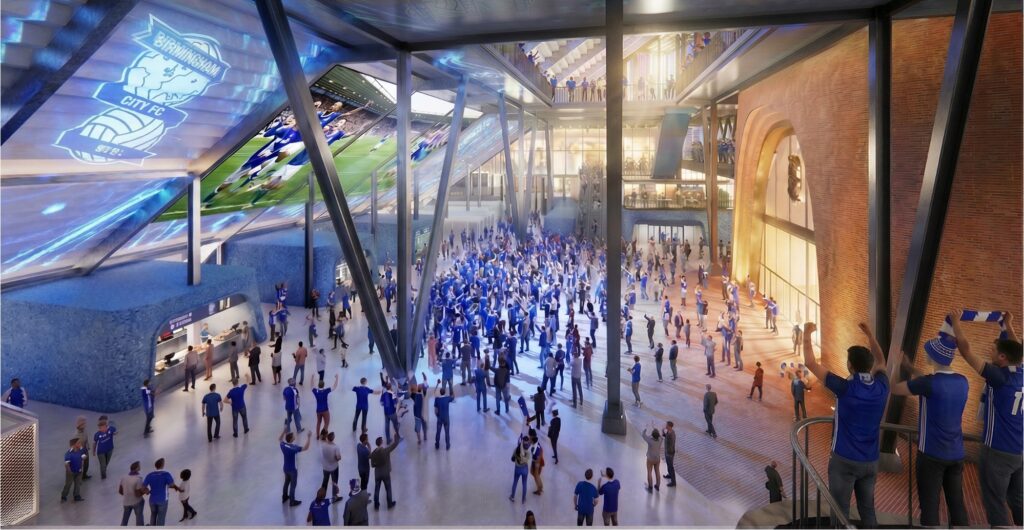
A third of the pitch slides under the Southern Atrium, a vast space with two bars that can accommodate 4,000 people (which will be open seven days a week). The idea is to create a glass deck in the floor, so people can literally see the grass grow beneath their feet!
In the Northern Tower, a ‘lift experience’ will take people to the top to a viewing deck overlooking the city and the Sports Quarter. At 119m, it is believed it will be the highest accessible public point in Birmingham.
From the West canal side side of the ground, there will be a spectacular restaurant view over the city skyline.
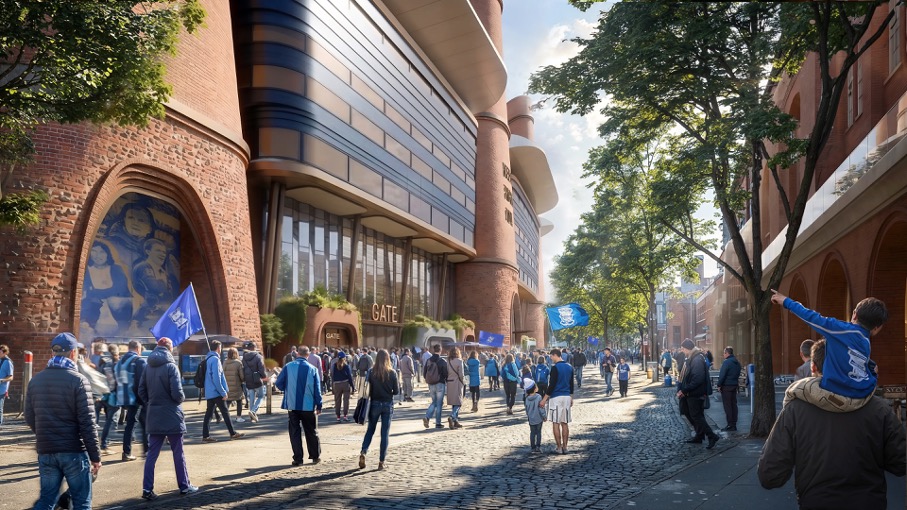
On the outside, a digital ‘skin’ will cloak the building, 15,000 sq.m of LED digital wrap. Each panel is bigger than the entire Piccadilly Circus LED screen.
Transport links to the stadium and Sports Quarter have always been, naturally, key to everything.
The £400 million Government investment that goes towards ending the Metro to the Sports Quarter – and eventually linking to Birmingham International Airport – was a vital first cog.
Smith revealed that Adderley Park Station is to be completely rebuilt, moved into the Sports Quarter, and be capable of dealing with trains of 12 carriages – currently capacity is four carriages.
There are going to be two mobility hubs, one with space for 1,200 cars on site – which adheres to FIFA and UEFA standards, allowing Blues to host major football events – and a coach station at the other.
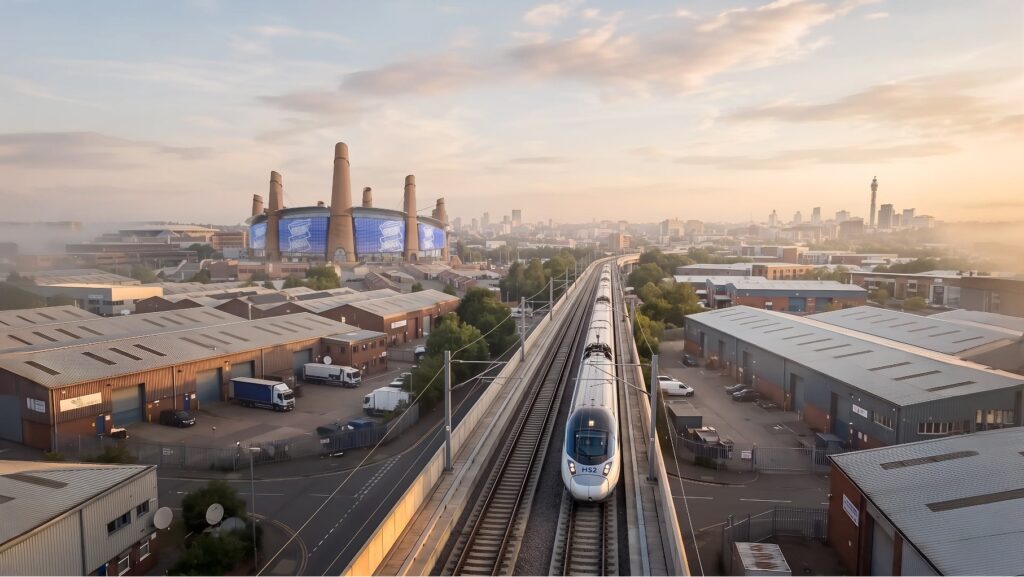
The 1875 bus that currently serves St. Andrew’s from the city centre will be transformed into a shuttle service that will also pick up at Curzon Street Station, where HS2 stops.
Four primary fan parks will be constructed, with the working titles The Garrison (for 2,000 people) at the end of Garrison Street, Blues Square by the Southern Tower (7,000), Blues Way (9,000) and Arena Square (6,000), where the Sports Quarter indoor arena will be built.
Blues Way will be the primary approach from the Tilton Road and proposed Metro station for The Powerhouse and the Southern Tower. It’s effectively a boulevard lined with shops, restaurants, hotels.
“Think Wembley Way but much better, much more activated and cool,” quipped Smith. The stadium was reoriented by 4.5 degrees from its original position to make this “much more a clear directional welcome than we had before,” said Postma.
There is scope for the Blues team to arrive by coach via Blues Way, to create a ceremonial style entrance to help build the atmosphere.
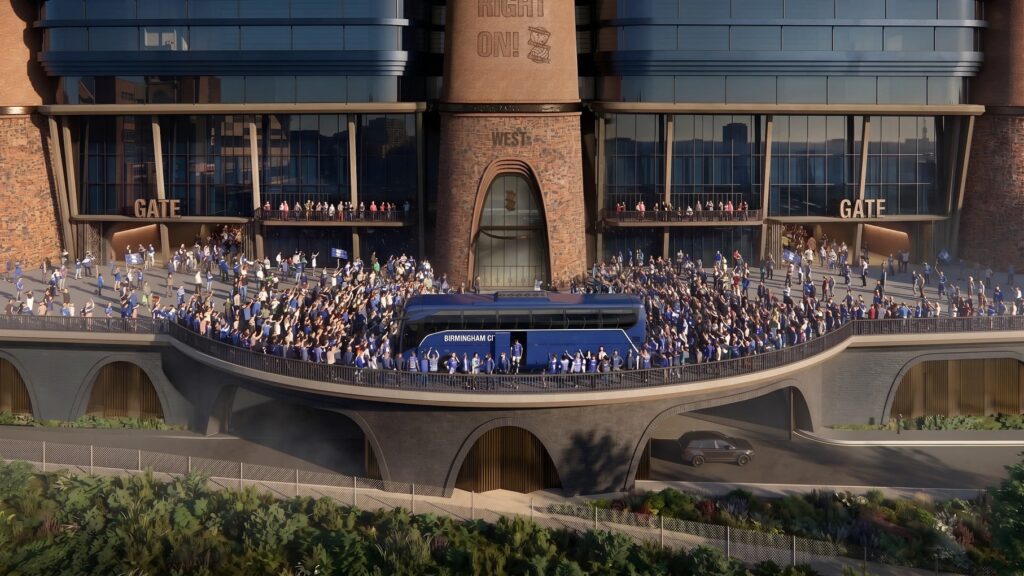
The Powerhouse, as a multi-event venue, will be capable of staging internationals, rugby, NFL and boxing. It should become a ‘must stop’ destination for the world’s top music artists, said Posta.
And much thought has gone into making it best in class, from acoustics to logistics and configuration. With a centre stage, capacity could be 73,500 for a concert.