
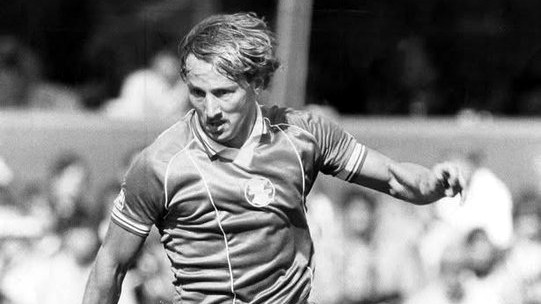
Robert Hopkins was one of us. A normal, regular Brummie who lived the dream.
Hoppy epitomised what being a Birmingham City player and supporter was – and, actually, is – all about.
The football world now has got smaller. Teams have become more cosmopolitan. The whole industry is shiny and slicker. Some of the local identity and soul may have been lost, it is reasonable to argue.
In Hoppy’s days, far from it.
For so many of us of a certain age, at a time in the 1980s when football was unfashionable, mired in it own mess and the hoi polloi sneered upon, Hoppy was someone you proudly identified with.
As the Zulus redefined casual fan culture – fashion, fighting, inclusivity – and with Hoppy a leader of a tough-as-nails underdog side that could also thrill you, the fit was an apt, snug one.
Combined with the dreadful socio-economic conditions in the West Midlands and disenfranchisement among the young, people were holding out for a hero, a cult hero, in such austere times.
Hoppy was hallmarked royal blue through and through. A hard-working, hard-nosed son of the city whose passion and love for the club was unwavering.
He was us. We were him.
There he was, dashing down the wing. Delivering a dangerous cross. Taking a spectacular shot. Administering a crunching tackle – and some. He played for the crest on the shirt. He played for all those watching and following Blues.
Then he’d have a drink alongside all and sundry afterwards before going up town and – more often than not – getting in a scrape or two . . .
It is no coincidence that there have been so many tributes after his shock death, at the age of 64, from supporters describing him as a favourite player or someone, as young fans, they aspired to be; that they truly felt he was ‘one of us’ and gave everything when on that pitch.
After finishing his playing days, Hoppy was a regular Blues watcher at home and away. He always kept a low profile and preferred to do his own thing with close mates, and the occasional corporate gigs sat uneasily with him, but he would also happily stop to chat and talk Blues with anyone.
Hoppy, who grew up in Hall Green, was devastated that he was overlooked by Blues as a schoolboy.
It resulted in him signing for Aston Villa and becoming one of their brightest stars, helping them win the FA Youth Cup in 1980.
Deep down, he knew it wasn’t the club for him and he famously used to wear a pin badge of the globe and ball Blues crest under his jersey.
Ron Saunders signed him for Blues, in a deal that saw Alan Curbishley go the other way, in 1983.
He was a key regular in the Second Division promotion-winning side of 1984/85 that bounced back from top-flight relegation – 39 appearances, nine goals.
In teams that contained the likes of Tony Coton, Noel Blake, Pat van den Hauwe, Mick Harford and Howard Gayle, Hoppy became part of a legendary unit that nobody messed with. If you took them on at football, fine, they had quality; if you took them on at the other stuff . . . good luck – one of the uncompromisingly hardest sides of any era.
In the next season, when Blues were again relegated, Hoppy suffered the cruel fate of scoring an equaliser and then an own goal that gave non-league Altrincham a shock FA Cup victory at St. Andrew’s – the worst ever result in club history.
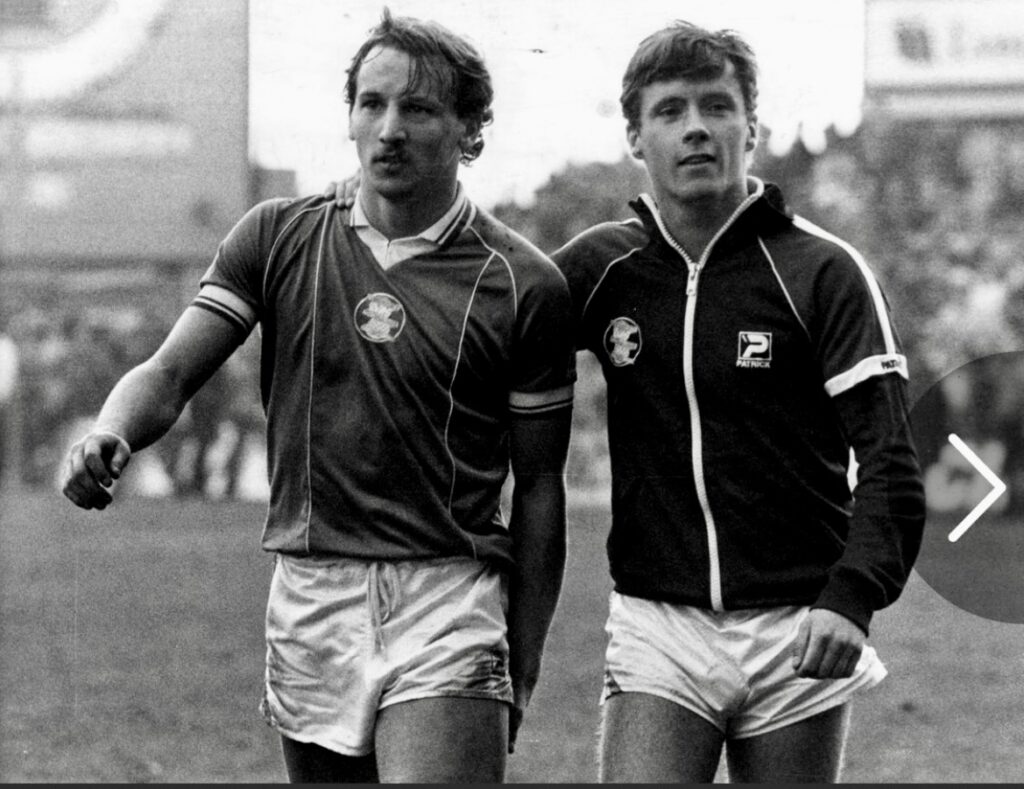
Hoppy moved to Manchester City for a short spell in September 1986 for £130,000 as Blues, in financial difficulties, needed the money.
Be he didn’t settle and so it was back to the West Midlands and Saunders’ West Bromwich Albion after just nine appearances.
He returned to St. Andrew’s in March 1989, signing for Garry Pendrey, on less money that he was earning at the Baggies.
Hoppy played in his customary spot on the wing, but also had stints up front and at right-back.
His technical ability, appreciation and understanding of the game was always inherent. As he got older, he showed there was more to him than the obviously recognisable whole-hearted, fast and direct runner who unsettled defences.
Hoppy’s time at Blues came to an end at Wembley, and it was bittersweet.
He was left angry and distraught that Lou Macari didn’t start him in the 1991 Leyland DAF Cup Final victory over Tranmere Rovers or bring him on as substitute.
Hoppy was released a few days later, after 207 appearances and 34 goals, over two spells. In 2012, he was inducted into the club’s Hall of Fame.
He remains the only Blues player to have scored for the club in all three of England’s top divisions.
I was fortunate to know Hoppy through my days reporting on the Birmingham Evening Mail and then mixing with him and mutual friends in the locals around where we lived.
Once we met up to discuss his career and be proudly brought a scrapbook that had been kept by his father, documenting his footballing highs and lows – all the cuttings from the Mail and everywhere else.
What made me chuckle was that it included the odd court report from the news pages of – how do I put this? – the latest escapade Hoppy and his 80s Blues teammates had become embroiled in on a night out.
That was Hoppy. What you saw is what you got. No apologies for anything, it was just him being him. And back then, that is what it was like – the group’s familial togetherness was legendary.
Fast forward a few more years down the line to the Leyland DAF Cup Area Final at Brentford. Blues defeated the Bees and booked a first Wembley trip in 35 years.
The players naturally celebrated their achievement with drinks before heading off but before embarking on the coach, nobody could find Hoppy. A quick search (and rescue) found him ensconced in the home social club under the main stand preparing to fend off angry Brentford fans armed with a pool cue!
There was a time on the Birmingham Evening Mail when we decided to introduce a guest columnist, from our three biggest clubs.
The idea was for a popular figure to give their ghost-written opinion about all the goings-on and also preview forthcoming weekend games. I suggested Hoppy for Blues, and his column went by the name of ‘aye, aye, Hoppy’. All good.
The thing was, Hoppy constantly wanted to wind up Villa fans by including little digs here and there. So, for example, if Villa were preparing for a big home cup game, Hoppy would urge: ‘Put something in warning about overcrowding on trains from Gloucester and Cannock this Saturday . . ‘.
Ian Johnson, the late and great former sports editor of the Birmingham Evening Mail and Sports Argus, was a friend of Hoppy’s and persuaded him to do a turn for his Coronation League Sunday side, based out of the old Stables pub on Hillfield in Solihull.
Hoppy was a class apart but did eventually get fed up of opponents trying to boot him because of who he was!
For several years that core group and various other close friends enjoyed some great times. And Hoppy was just that normal guy, sitting in whatever local we were at, joining in the chat and mickey-taking.
However, you were always careful not to wind him up too much – there remained an air of respect around him.
Hoppy never had any airs and graces. He never felt he was above anyone because he had been a footballer. He loved the Blues and he loved his family.
He played for the Blue All Stars charity side for an astonishing 33 years. He was part of the inaugural squad in 1992 and the final one in September 2025.
He had to graft to earn a living after his playing career ended. He was never bitter about that.
If he had been born into a different decade, the game as it has become would have made him into a bigger star and showered him with riches.
Yet, somehow, you feel that the legacy he has left – witnessed by the outpouring of love, affection and his clear popularity – seems kind of right.
He was us. We were him.
Rest easy, Hoppy.
Robert Arthur Hopkins
October 1961 – January 2026